Part 1 of SEO vs SEM: Understanding the Two Sides of Search
It is Friday afternoon, and you have just remembered that you promised to organise a birthday cake for Sunday.
You search for “eggless birthday cake delivery in Bengaluru”. Some results carry a “Sponsored” label. Others appear as regular website listings. You open a bakery’s page, check the designs, look for delivery information, and decide whether to order.
For you, this takes a few minutes. For the bakery, appearing during those minutes can mean being considered by someone who had never heard of it.
That is why businesses care about search visibility. A search often begins with a need already in motion: someone wants to learn, compare, visit, book, or buy.
This series explores two ways businesses become visible at that moment. We will use SEO for organic search optimisation and SEM for paid search advertising. You may encounter SEM used more broadly to include both, but keeping them separate here makes the distinction easier to understand.
Let us start with the results a business has not paid the search engine to place.
What happens before a page appears?
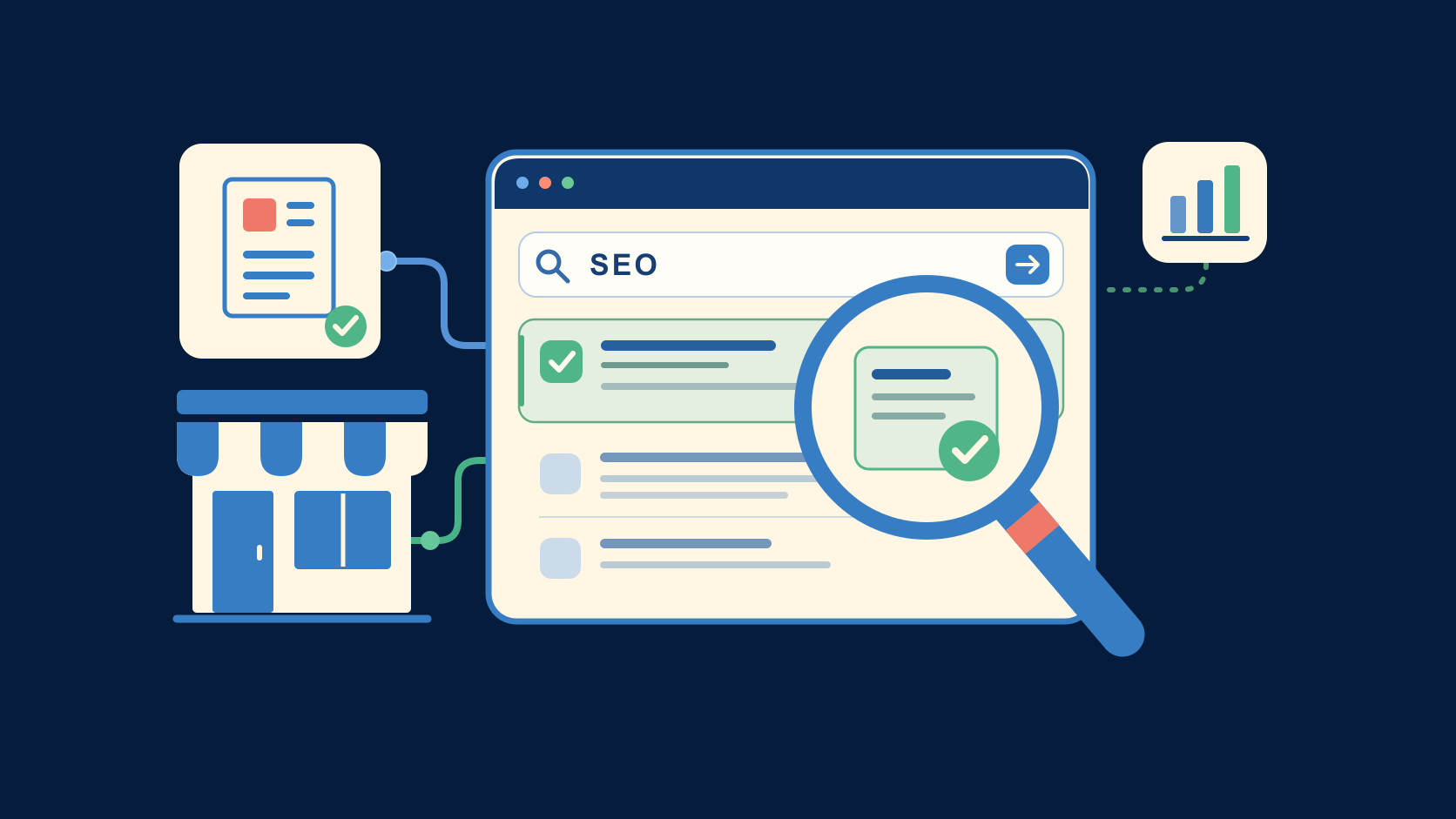
SEO stands for search engine optimisation. It involves improving a website so search engines can understand its pages and people can find useful answers through organic search.
Think of a search engine as an enormous library with a librarian who receives millions of different questions. Before recommending something, the librarian needs to know what is available and what each item contains.
Search engines perform their own version of this process. They discover and explore pages, often through links. They analyse eligible pages and may store information about them in an index. When someone searches, their systems select results relevant to that query. These stages are commonly called crawling, indexing, and serving search results. Google explains this process here.
Being in the index does not guarantee a prominent position. A library can contain your book without recommending it for every question.
SEO helps a business make its pages easier to discover, understand, and consider for relevant searches.
What would that mean for a bakery?
Imagine Meera runs a neighbourhood bakery. Her website looks attractive, but its homepage says little beyond “Making every celebration special”.
That might sound pleasant. It does not tell a potential customer whether she sells eggless cakes, delivers to their neighbourhood, or accepts orders at short notice.
Meera’s SEO work could begin with information she already shares over the phone.
Her cake pages could explain available sizes, ingredients, customisation options, delivery areas, and ordering deadlines. A page about eggless birthday cakes could show the actual products and answer the questions buyers usually ask.
Now imagine two searches:
“Why does an eggless cake sometimes turn dense?”
“Order eggless birthday cake in Bengaluru.”
The first person probably wants an explanation. The second is closer to making a purchase. A baking guide could help the first; a clear product or ordering page would better serve the second.
This difference is called search intent: what someone hopes to accomplish by searching.
Understanding that purpose helps a business decide what a page should do. A visitor trying to order a cake should not have to work through a long baking lesson to find the menu.
Useful information needs a usable home
Words matter, but SEO also involves how a website works.
Clear page titles help describe its contents. Sensible navigation connects related pages. Technical problems can prevent search engines from accessing information. Repeating a search phrase throughout a page will not compensate for missing answers or inaccessible content. These principles are covered in Google’s SEO Starter Guide.
For Meera’s customers, the practical test is straightforward: can they find what they need and complete the next step?
If the cake photos will not load on a phone, the delivery details contradict each other, or the order button is broken, attracting visitors achieves very little.
A good page should make the customer’s decision easier. Sometimes that means adding an explanation. Sometimes it means removing clutter.
Why invest in something that takes time?
Suppose Meera creates a genuinely useful guide to choosing a cake size for a gathering.
She puts effort into it once, then updates it when necessary. If it earns visibility, it may help different customers over time: someone planning a small birthday today, a school celebration next month, and an anniversary later.
That continuing usefulness is a major attraction of SEO. A strong page can keep introducing a business to people without a separate advertising charge for every organic click.
But “organic” does not mean effortless or costless. Writing, photography, development, maintenance, and the owner’s time all have a cost.
There is uncertainty, too. Improvements may take time to affect visibility, competitors keep working on their websites, and no one can honestly guarantee a particular organic ranking. Google’s guidance on hiring an SEO makes that limitation explicit.
SEO therefore needs patience and a sensible business purpose.
A bakery does not necessarily benefit from thousands of visitors seeking recipes if almost none can become customers. A smaller audience searching for cakes within its delivery area may be more valuable.
The useful question is whether relevant visitors are finding the business and taking meaningful next steps: exploring products, making enquiries, or placing orders.
For Meera, SEO is a way to make her real offering easier to discover and understand. It gives her useful pages the opportunity to meet people at the right moment.
But she also has a new celebration menu launching next week. Organic visibility may not develop in time for that deadline.
Those sponsored results now deserve a closer look. In Part 2, we will explore what happens when a business pays for the opportunity to appear.